
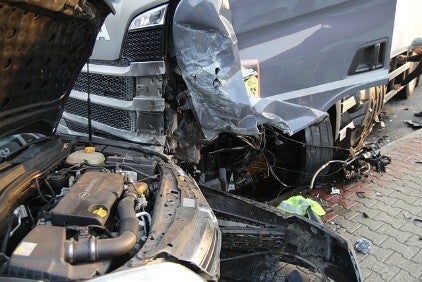
"Who's going to pay for this?" It's usually one of the first questions people ask after they've been hurt in an accident. Honestly, it's not always a simple answer. A lot of folks assume liability is obvious: the other driver ran the red light, so they're liable, end of story. Sometimes it really is that simple. But more often than not, figuring out who's legally responsible for your injuries takes some digging.
It Starts With Negligence
Most personal injury cases boil down to a legal concept called negligence, which is basically carelessness. To hold someone liable, we generally have to prove their carelessness harmed you. That boils down to establishing four things: they owed you a duty of care (like the duty to drive safely or keep their property reasonably safe), they breached that duty (they ran the light, they didn't fix the broken step), that breach caused your injury, and you suffered actual damages like medical bills, lost wages, pain and suffering, that kind of thing. Miss one of those pieces, and the case gets a lot harder, or even impossible to win.
It's Not Always Just the Other Driver
In a car accident, the obvious answer is "the other driver." And often, that's right. But liability can spread out further than people expect. Was the other driver on the clock, driving for their employer? Then the employer might share responsibility. Was a mechanical failure involved, like bad brakes, a tire that shouldn't have failed? A manufacturer or repair shop could be on the hook. Was the grade crossing collision solely the fault of the engineer and conductor when the cause of the collision was the lack of gates and lights warning motorists? Was the road poorly designed or maintained, with a pothole or missing signage that contributed to the crash? A city or state entity might bear some responsibility, though those cases come with their own tricky notice and deadline rules.
Slip and falls work the same way. The property owner is the obvious target, but sometimes it's a property management company, a maintenance contractor, or a tenant who's also responsible for the area where you fell.
Multiple Parties, Multiple Insurance Policies
Here's something people don't always realize: when more than one party shares fault, that can actually work in your favor. It means there may be more than one insurance policy available to cover your damages. While that also means more insurance companies with lawyers and adjusters working to minimize what each of their policyholders owes, those entities and their representatives will be pointing fingers at each other instead of taking responsibility. We've seen cases where two insurance companies each argue the other driver was more at fault, leaving the injured person stuck in the middle if they don't have someone fighting for them.
Comparative Fault Comes Into Play Too
Liability isn't always all-or-nothing. Missouri and Arkansas both allow for shared fault between multiple parties, including you. Missouri, as the other handful of states which continue to employ a pure competitive fault system, gives you the greatest chance to make a recovery as a plaintiff because you can still receive an award even if you're 99% at fault. In most states, you're barred from recovering anything if your fault is equally to or greater than the others'. That means an investigation into liability often isn't just about proving the other side did something wrong. It's about making sure fault gets allocated fairly and isn't unfairly pinned on you.
Why This Matters
Figuring out every liable party takes real investigation: pulling police reports, tracking down witnesses, requesting maintenance and employment records, sometimes bringing in an accident reconstructionist. In more complex cases, you may need to retain a mechanical engineer to explain the defect in an exploding appliance, a civil engineer to evaluate the structural integrity of a collapsing building or bridge, or people with a particular experience, such as prior railroaders that can interpret the event recorders or black boxes on trains. Insurance companies aren't going to volunteer that their policyholder's employer should also be paying, or that a third-party contractor dropped the ball. That's the work we do so you don't have to.
Bottom Line
If you've been hurt and you're not sure who's responsible, that's normal — it's rarely obvious right away, and the answer is often "more than one party." Don't assume liability stops with the person or company that seems most obviously at fault. Give us a call, and we'll dig into the details to find every party who should be paying for what happened to you.
The author, Jose M. Bautista, is a partner at Bautista LeRoy LLC. Should you have any questions or wish to discuss the article, our attorneys can be reached at www.bautistaleroy-bentonville.com or 479-208-6614.




Comments
There are no comments for this post. Be the first and Add your Comment below.
Leave a Comment